Every one of Mandelli’s pieces of art is a bridge between the past and present, between who we are and what we choose to pass on.
Food becomes living memory, tangible belonging: every ingredient carries an origin, every preparation a knowledge, every aroma a story that continues to speak to us in the present.
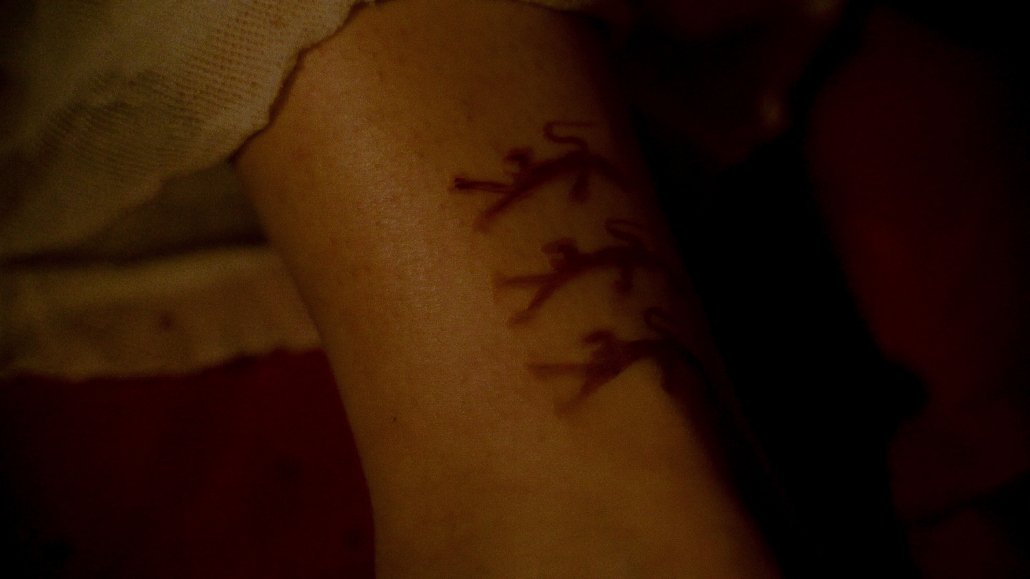
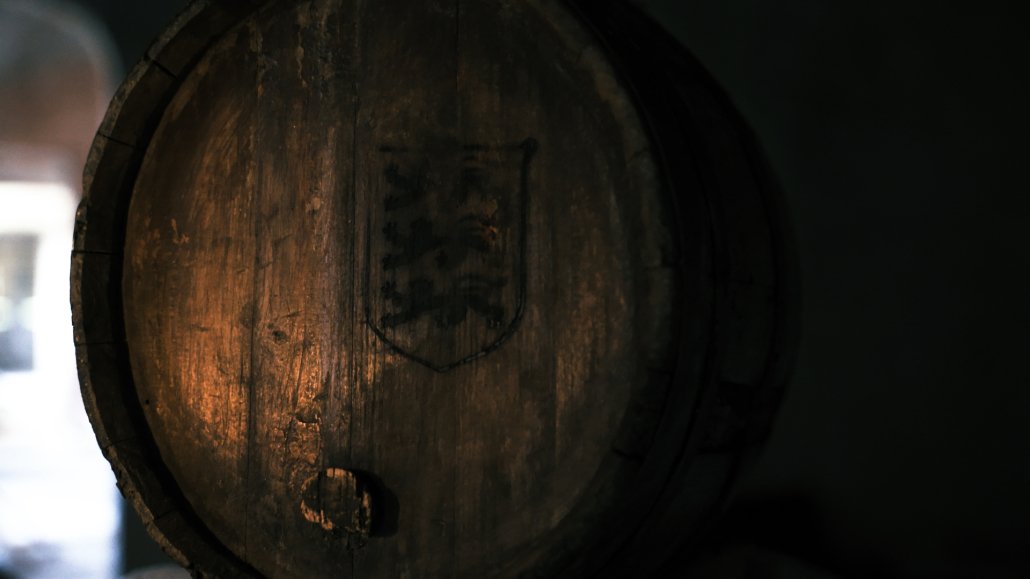
When we imprint the mark of the Three Lions, we renew an ancient pact — not with the past itself, but with what has been entrusted to us: respect for the world that sustains us, awareness of limits, the fragile balance of imperfection.
This is the responsibility of a mark that protects and preserves.
To eat is not merely to be nourished: it is to rediscover a bond with those who came before us, with nature and its offsprings, with handed down gestures, and with a simplicity that still exists today.
The brand of the lions, then as now, is not a simple mark: it is a rite of belonging. A gesture that for centuries has consecrated what is meant to be protected and preserved.
For this reason, the brand of the Three Lions still accompanies our lives: a symbol of strength, loyalty, and memory.
Even the monks in our history were branded with fire, for those who transform the land, who listen to it and safeguard it, carries with them their own belief.
Today that fire lives on in our culinary arts: each craft is branded in fire, so that it may be not only food, but identity and visible creations.
The lion is not only a symbol of strength: it is an ancient memory, a powerful and sacred animal, tied to archaic venerations and divine visions.
When the lineage of the De Mandelo family – an ancient Sabine clan – was invited to the Middle East as part of a legion under the Flavian dynasty, then ruling those lands, their destiny went beyond war.
Amidst the sand and sacred ruins, they encountered women consecrated to the cult of Isis. These women were priestesses who bore on their bodies a mark branded with fire, Three Lions, a sacred emblem of protection and belonging.
The De Mandelo were defended by these women not with weapons, but with ancient knowledge: the wisdom of waters, stars, and earth. In gratitude, and as a pledge of protection and guardianship, the De Mandelo adopted the symbol.
The Three Lions became their mark, branded in fire forever. The knot that ties them recalls the bond of loyalty to the priestesses of Isis.
Since then, the Three Lions have never changed. Wherever the descendants of the Mandelli family have lived, cultivated, or defended, that sign has remained with them, representing a fire that does not burn, an origin that cannot be forgotten.
Curiosities
Few know that the so-called lions are in fact leopards: felines shown walking, with their heads turned toward the observer.
This frontal gaze distinguished them from the classical lion, depicted rampant and in profile.
Over time, however, the term “leopard” changed. The Plantagenet dynasty abandoned that word and preferred “lion passant guardant” (lions walking, with their heads facing forward). Calling them lions, even while keeping the leopard’s stance, elevated their symbolic rank: no longer “hybrid” creatures, but true kings of animals. It was both a heraldic and political choice, affirming sovereignty and the legitimacy of their power.
Even today those lions look straight ahead, with a steady, watchful gaze, as if to remind us that their strength is not only a symbol, but a presence that observes and protects.
Villa Mandelli Tedoldi (18th century), located in Bellena, Fontevivo, is more than a family residence: it is the symbolic heart of our story, a silent guardian of historic foundations, rites, and memory.
The Villa stands in perfect alignment with the Abbey of San Bernardo in Fontevivo, rising directly above the monks’ ancient spring which are now preserved within the vault.
This bond with water is a living testimony to the continuity between the agricultural work of the Cistercians and our own tradition.
In the hall of honor, a fresco depicts Isis Latona, goddess of fertility and protection, mother of transformation and guardianship.
She is a figure capable of crossing centuries and distant worlds, she leads us back to our origin. Reminding us of the ancestors journey and the legend of the priestesses of the Middle East who, branded with fire and marked by the Three Lions, offered protection and knowledge to the legionaries of the Sabine De Mandelo line.
That encounter, between the soldiers and the priestesses, signifies a bond between strength and ritual. It left an imprint that still lives on today in the Villa’s paintings and in our symbols.
The fresco is not mere decoration, but sacred memory and a promise renewed each time we work the land, each time we choosing to preserve rather than to dominate.
Villa Mandelli Tedoldi is the place where myth and nature meet.
The protection of the priestessess and the agricultural vision of the monks speak the same language: a hymn to life.
Over time, the aquifers have lowered and springs have become increasingly rare.
In Fontevivo, however, the source of the spring continues to flow just as it did in the Middle Ages. Villa Mandelli Tedoldi stands above it, guarding it still today within a vault. Representing a silent heart that preserves the memory of past centuries.
We, the keepers of the spring, protect and preserve it, knowing that it is not merely water, but a precious legacy.
It is the sign of a bond between past and present and the very inheritance once defended by the monks, which we continue to safeguard for the land, for those who dwell upon it, and for those who will honor it in the future.
Springs are places where groundwater rises naturally to the surface, creating pools, bubbling sources, and small streams. They form in flatlands, where an impermeable layer, such as clay, stops the water from descending underground and forces it upward.
Fontevivo, as its very name dictates, comes from fons vivus — “living spring,” water that gushes up from the earth.
It was here, in the 12th century, that the Cistercians arrived from Chiaravalle della Colomba and discovered the springs.
With their expertise in reclamation and irrigation, they dug ditches and canals to direct the water toward fields, mills, and storage basins.
This medieval feat of engineering made it possible to drain marshlands and transform them into fertile fields. Allowing the monks to irrigate meadows and crops with constancy — essential for cattle farming — as well as power mills and workshops.
In 1142, twelve monks from Chiaravalle della Colomba founded the Abbey of San Bernardo in Fontevivo.
They chose a marshland and, within a few years, transformed it into fertile ground, able to sustain both people and animals.
The architecture reflected the principles of the Order: stone and brick walls, simple proportions, and spaces defined by function rather than ornament.
The church was dedicated to prayer, the cloister to community life, while mills and stables supported daily labor.
Fontevivo was also a centre of knowledge: in the scriptorium, monks copied manuscripts and passed on their teachings.
They cultivated both the earth and the mind.
The very name, Fons Vivus — “Living Spring” — recalls the source that flowed there, a symbol of grace and renewal. For the monks, the water that came from the sprig was not only an essential resource, but a sign that their spiritual and manual dedication had found a home in a place blessed by nature.
Cistercian spirituality was reflected in a lifestyle of austerity.
They slept in simple cells, ate modest meals, and embraced an existence without excess, in strict coherence with the rule of ora et labora.
Manual labor was not a duty to be delegated, but an essential part of monastic discipline and this daily toil became a form of prayer made tangible.
They were known as the “white monks,” due to the pale color of their garments composed ofundyed wool tunics and scapulars, whose natural tone sharply distinguished them from the Benedictines.
The Benedictines known as the “black monks” wore more aesthetic attire, representing purity and identity.
Their ingenuity left a lasting mark on medieval agriculture.
They improved crop rotation, expanded irrigated areas, developed livestock farming, and introduced permanent meadows — essential for fodder and cattle breeding.
The networks of canals they traced shaped the landscape in ways still relevant today.
At the heart of this system arose the granges: autonomous, well-organized farm estates, entrusted largely to the conversi.
The conversi were lay brothers who worked alongside the monks, encharged with the most demanding tasks.
Originally, much of the Po Valley was swamp: low, damp, and muddy terrain, largely considered unfit for life.
Every change to the land carried spiritual meaning: to reorder the landscape was to restore creation to a lost harmony.
It was precisely here that the Cistercians settled, reclaiming the land through clearing, canals, and drainage works, transforming it into fertile fields and irrigated meadows.
Both monks and nuns took part in this work, united by the same rule and the same ideal.
Among the monks’ teachings was the awareness that human life could not exist without an alliance with nature.
This is why they practiced beekeeping — not only as a source of honey, wax, and propolis, but as part of a broader culture of stewardship.
The pollination of plants, the cycle of blossoms and harvests depend on the flight of bees – the balance between humankind, animals, and landscape.
The monks had perceived what science confirms today: protecting bees means safeguarding biodiversity.
Honey was nourishment, wax served to seal and protect, propolis was prized for its natural virtues — now recognized as a natural antibiotic.
Yet their value extended far beyond immediate usefulness.
From the bees we learned seasonality and the silence of their work, the respect and restraint they remind us to uphold, the care and vigilance they demand, the simplicity and fragility they reveal.
In their hive we rediscover identity and the promise that bonds the past and future, the balance and harmony of a community where each part has meaning only together with the others, the wisdom and authenticity born of an ancient knowledge faithful to the truth of nature.
An ancient gesture, handed down by the monks to protect and preserve our arts, is born from a blend of vinegar, propolis, and charcoal.
Three gifts of nature.
Vinegar purifies.
Propolis forms a natural barrier, rich in resins, that supports surface hygiene.
Charcoal cloaks in black, shielding the exterior.
That black is not darkness but guardianship: it defends against mold without suffocating, allowing air to pass through — essential for slow maturation — while maintaining balance between inside and outside.
Thus, aging becomes a journey.
The arts grow under protection, transforming day after day.
It is the sign of a monastic wisdom that transmitted not only recipes, but also a method and a philosophy that invites preservation by allowing life – safeguarding without confining.